The Sound That Ends It
Why small mistakes matter in the wild.

It’s always something small.
A stick breaking. A careless movement. A step taken too quickly. Nothing dramatic. Nothing that would matter almost anywhere else. he kind of thing modern life allows us to ignore without consequence.
Out here, it ends the opportunity to feed ourselves.
There is no warning and no opportunity to recover. One small mistake and the animal is gone. The fish won't take. The beach comes up empty. It happens quickly, and it’s final. That’s the difference with wild food. It doesn’t tolerate distraction.
Small Errors, Immediate Consequences
Most of life is spent buffering. You can be rushed, half-present, thinking about something else, and still get what you need. Every thing we need is expected, easy and automatic. Systems are designed to absorb error. Timing is flexible, outcomes are predictable, and attention is optional.
Wild food removes that buffer entirely.
Miss the tide and there are no clams. Drag the fly across the eddy with a bad drift…the fish simply ignores what you’re offering. Take one careless step and the Elk vanishes into the distance without hesitation.
It is harsh and unforgiving.
There’s no adjustment period and no opportunity to correct the course. The environment is exact in a way most people aren’t used to. Small mistakes don’t accumulate out here. They end things. Quickly.
Stalking Makes It Obvious
Nowhere is this more apparent than in a stalk, where everything depends on your ability to manage small details under pressure.
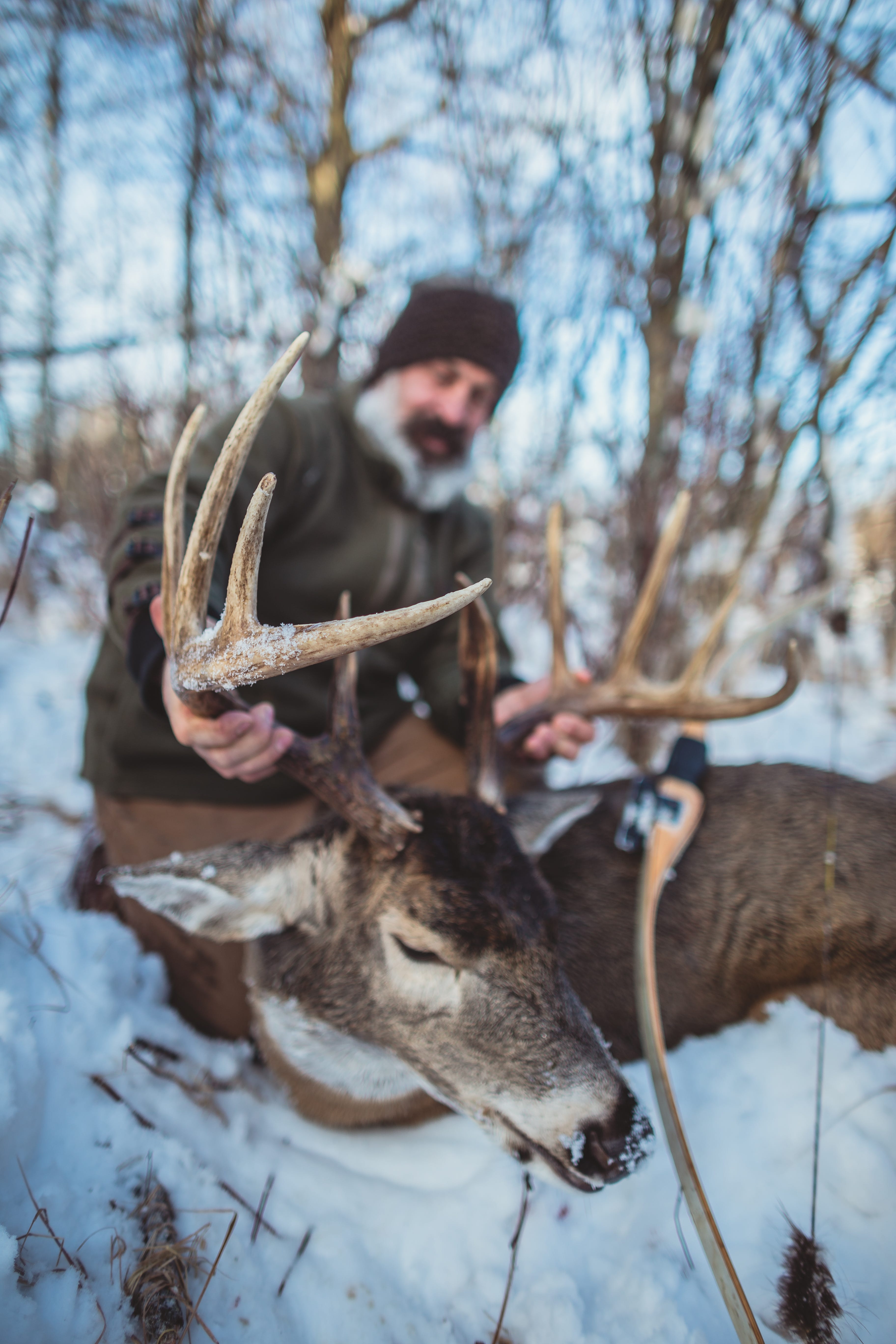
I once watched a massive white-tailed buck—perhaps the biggest I had ever encountered—walk steadily toward me across roughly 800 yards of open pasture. It was late November, around minus 20 Celsius, and the cold made everything sharper. Sound carried differently. Even the smallest movement had significance to it.
The only tree available to me was a thin, wind-blown poplar. I was maybe eight feet off the ground. Just high enough to be exposed if I made even a small mistake.
The buck closed the distance without hesitation. When it reached me, it came right to the base of the tree and started smelling my steps! Its head was up, stretching, testing the air. I could have reached down with an arrow and touched it. That’s how close it was.
At that distance, there’s no room for error. Every movement has to be controlled before it happens. Not during—before.
The deer shifted slightly, further away towards the trail it should’ve been on, and I still didn’t have a shooting lane. To take the shot, I had to reposition in the tree, slowly and silently, with the animal only yards away. I was shooting a 1957 Bear recurve, which means no mechanical advantage—just draw, anchor, release. Any unnecessary motion, any sound, and the opportunity was gone.
That moment wasn’t about skill in the abstract. It was about whether I could maintain presence across everything at once—my body, the bow, the angle, the animal’s awareness, the noise I might make without realizing it.
I made the shot, and it was clean. But the outcome wasn’t decided at the release. It was decided in how I managed every small detail leading up to it.
The Pattern of Presence Holds Everywhere
That same structure shows up across everything tied to wild food.
On the coast, success is tied to a narrow window where tide, timing, and location align. Outside of that window, there is simply nothing to find. On the river, it’s precision—drift, current, angle, and what the fish are feeding on…the presentation, all of this, it all has to come together. If they don’t, there is no take.
Different environments, same underlying rule: the food is there, but only if you meet the conditions with your attention to detail.
Wild food doesn’t reward effort on its own. It rewards your detailed presence.
Attention Is the Requirement
This is where most people misread the situation. They assume the solution is to work harder or spend more time. But time and effort without attention don’t produce results consistently.
What matters is whether you are actually tracking what’s happening in front of you in real time: what the wind is doing as it moves across terrain, what the ground looks like two steps ahead, how light and shadow affect your visibility, how the animal or the water is behaving in that exact moment. How prepared your equipment is.
Attention isn’t optional here. It’s the condition that a successful food outcome depends on.
Forward, Not Reactive
Over time, out in the field, making the mistakes, the shift is subtle. You eventually stop reacting and start anticipating. A sort of sixth sense begins to emerge within you.
The mistake isn’t the stick breaking—it’s failing to see it before you stepped. The wind doesn’t suddenly betray you; you just weren’t tracking it closely enough. The fish doesn’t refuse without reason; your drift was off before it ever entered the strike zone.
What feels sudden is usually just something you failed to notice early enough.
You were behind it.
What To Pay Attention To
This doesn’t require tracking everything at once, but it does require tracking the right things consistently.
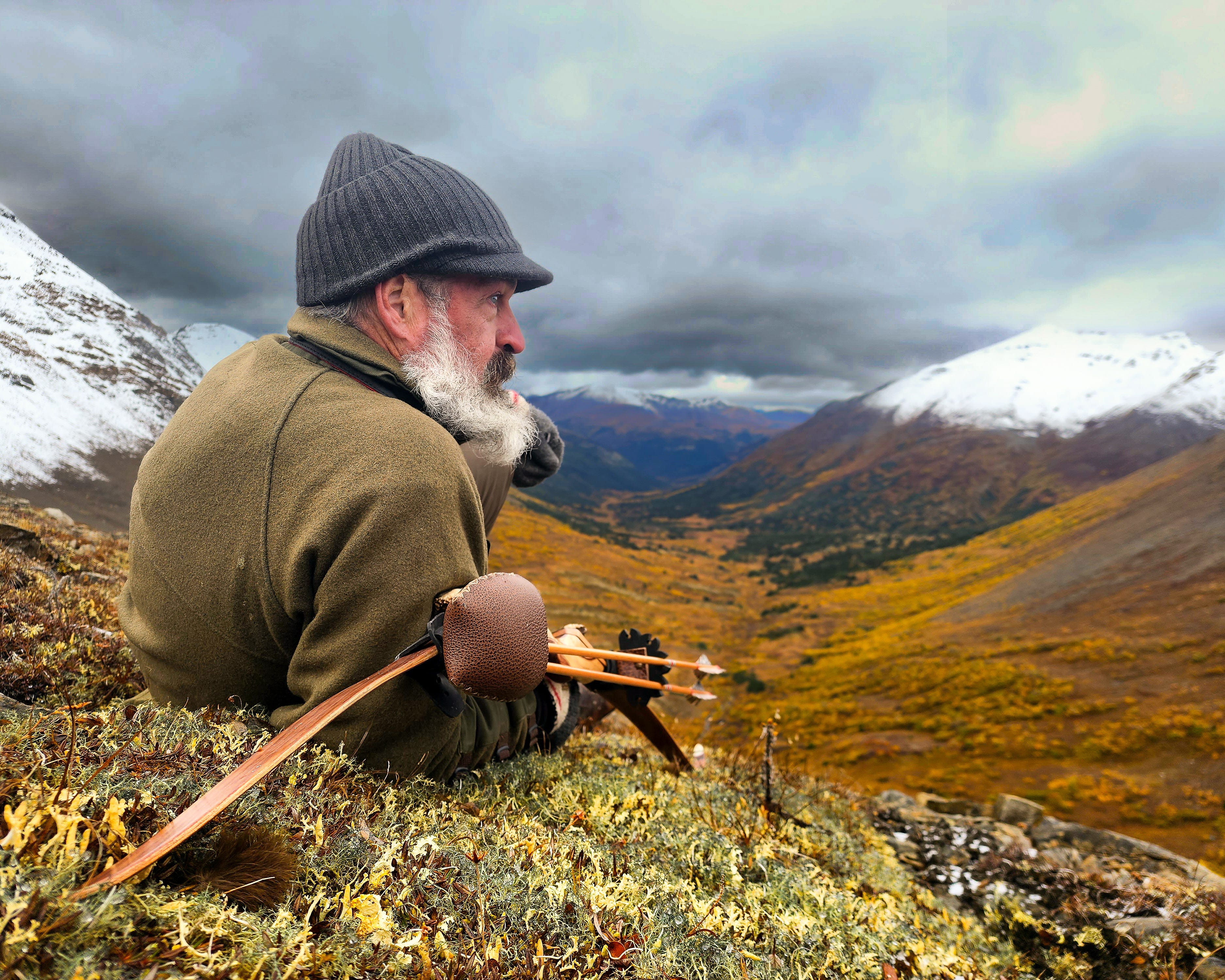
Look ahead to where your next steps will land, not just generally but specifically. Check the wind more often than feels necessary, especially as terrain changes. Move based on conditions rather than impulse. Slow down earlier than you think you need to. And assume that every opportunity is fragile, because it is.
You don’t need more effort. You need fewer missed details.
Why It Matters
This is why wild food feels different.
It isn’t just the result—it’s the process required to get there. You have to be present in a way that most modern systems don’t demand. You have to notice what most people overlook. You have to align yourself with conditions instead of forcing an outcome.
There’s no shortcut to that.
And because of it, when it works, the result carries weight. This is why I love the pursuit of wild food!
The Throughline
Across everything—shellfish, fish, birds, big game—the same principle applies.
Small details decide the outcome, and those details only show up if you’re paying attention.
That’s the exchange.
You bring your full, undivided attention, and the environment gives you a chance. If you don’t, it remains closed.
Continue Reading
If this essay changed the way you think about attention in the field, these articles take the idea further.
Read the Landscape (Coming Soon)
Learn how to recognize the clues the landscape is offering before they become opportunities.
I Hunt Landscapes
Why the best hunters don’t simply hunt animals—they learn to hunt places.
Learning the Grasslands
What cranes, grouse, and geese taught me about seeing a landscape differently. A podcast epsisode.